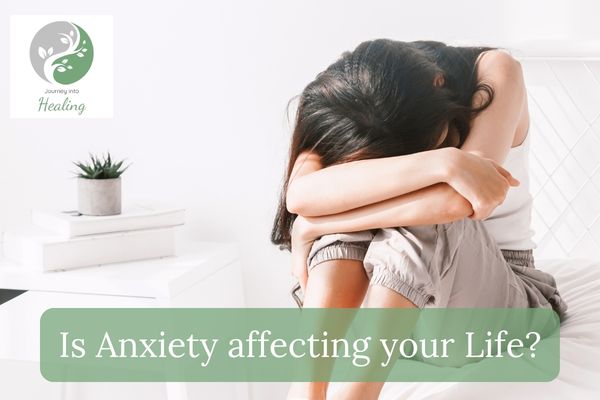
Is Anxiety affecting your life?
Do you find yourself with a constant loop of negative thoughts running through your head? Do you worry about the future and what might happen? Do you focus on the worst outcome? Do you find yourself in constant fear about what other people think or anticipating a trip or letting people down? Do you avoid certain situations?
Anxiety is associated with the emotions fear and worry and is something we all experience from time to time. It is usually felt around difficult or threatening experiences. I'm sure we can all relate to feeling butterflies in our stomach when we had to stand up in school and present a project or speech or having to have a difficult conversation with a friend or family member. Your heart races, you feel hot, you sweat, you feel like you can't breathe properly to speak and you wish the ground would open up and swallow you.
These are all normal signs as your body releases adrenaline in response to stress, preparing you to fight or flee. This response is part of the sympathetic nervous system and causes your heart to beat faster to supply your muscles with energy. Blood is diverted away from non-essential functions like digestion, hence the butterflies. Your blood pressure increases causing you to feel light headed and dizzy. Your temperature increases causing you to feel hot and sweat as your body tries to cool you down.
Anxiety can be triggered by traumatic experiences like moving house or country, divorce, death, starting a new job, illness, difficult relationships, violence or feeling isolated. It can also be learnt from someone close such as a child from a parent. There can also be a specific incident that triggers anxiety. Look back before your symptoms started and see if there is a specific incident that could have caused your anxiety.
Lots of small stressors that accumulate can also cause anxiety. So too can fearing having a panic attack, resulting in more attacks occuring. You may also experience chronic signs of anxiety such as headaches or chronic fatigue. If your adrenals are constantly having to produce adrenaline in response to your anxiety it will cause them to become exhausted over time.
Physical symptoms:
Butterflies in the stomach
Shortness of breath
Headaches
Dizziness
Hot flushes
Increased heart beat
Increased perspiration
Dry mouth
Tightness in the chest
Feeling sick
Needing to go to the toilet
Shaking
Palpitations
Psychological symptoms:
Having negative thoughts
Thinking of the worst that can happen
Feeling frightened, panicky and out of control
Fear of what other people think
Feeling detached
Feeling like everything is speeding up
Feeling like you might die
Wanting to run away and escape
Behavioural symptoms:
Avoidance of people or situations that make you associate with your anxiety
What can you do to help ease symptoms of Anxiety?
Relaxation techniques such as tensing and releasing of all the muscles helps to release tension from the body and mind. Work from your head down to your toes, tensing your muscles and then releasing them.
Deep breathing. If you suffer from anxiety you are probably breathing shallowly only using the top of your lungs. To breathe into the bottom of your lungs you need to use your belly. Take a nice deep breath in, feeling your belly expanding, hold it, and breathe out expelling all the air and feeling your belly sinking. Repeat this cycle of breathing until you feel your heart rate calm.
Distraction helps by thinking of something other than what you are fearing or worrying about. Anything that takes your mind away from the worry will do.
Make a list of your negative thoughts and next to them write positive ones. Create your own affirmations. Keep this list handy so you can refer to it when you are feeling anxious. You can also stick them around your home where you can see them.
Worry time. Set aside time every day for worries. If you start worrying about something outside of your worry time, make a note of what you are worrying about and put it aside till your worry time. Often when you come back to it at a later time, it doesn't seem so bad.
EFT (emotional freedom technique or tapping) helps to process and release emotions and is very effective in easing anxiety. Have a look at The Tapping Solution where you can access guided meditations for anxiety.
CBT (cognitive behavioural therapy) helps to calm the mind and body helping you to create new behaviours, habits and thoughts around your anxiety.
Counselling and talking things through with someone else who can listen empathetically can be beneficial.
Hypnotherapy can help you relax and tap into your subconscious mind, helping you to accept new and supportive suggestions.
Listening to guided meditations and visualisations help you to relax
Good diet is always important, avoiding blood sugar dips which can trigger anxiety symptoms. Try and avoid sugar, caffeine, alcohol and smoking if you suffer from anxiety as they increase anxiety symptoms.
Herbal remedies like St Johns Wort and Valerian are natural tranquilisers which help to relax.
Aconite, a homeopathic remedy helps ease panic attacks.
Exercise helps to release endorphins and serotonin, which make you feel good.
Going for a walk in nature helps to ground and focus your energy in your body instead of your mind. Notice all the beauty around you, be present because in the present moment All is Well.
Connecting with people is vital so you know you are not alone.
Complementary therapies like massage, aromatherapy, Reiki energy healing, acupuncture and Reflexology are helpful in restoring balance and promoting relaxation.
What do you find helpful when you feel anxious?
I would love to hear from you about what you do to help yourself cope when you are feeling anxious or worried about something, let me know.
With love,